





Choosing among popular lash extension styles starts with one question: where will the lashes be worn? A workday may call for quiet definition. A wedding may need softness with presence for photographs, while a party can support more density, length, or color.
This guide offers a starting style for each occasion. The final design still needs to suit the client’s natural lashes, eye shape, and preferred intensity.
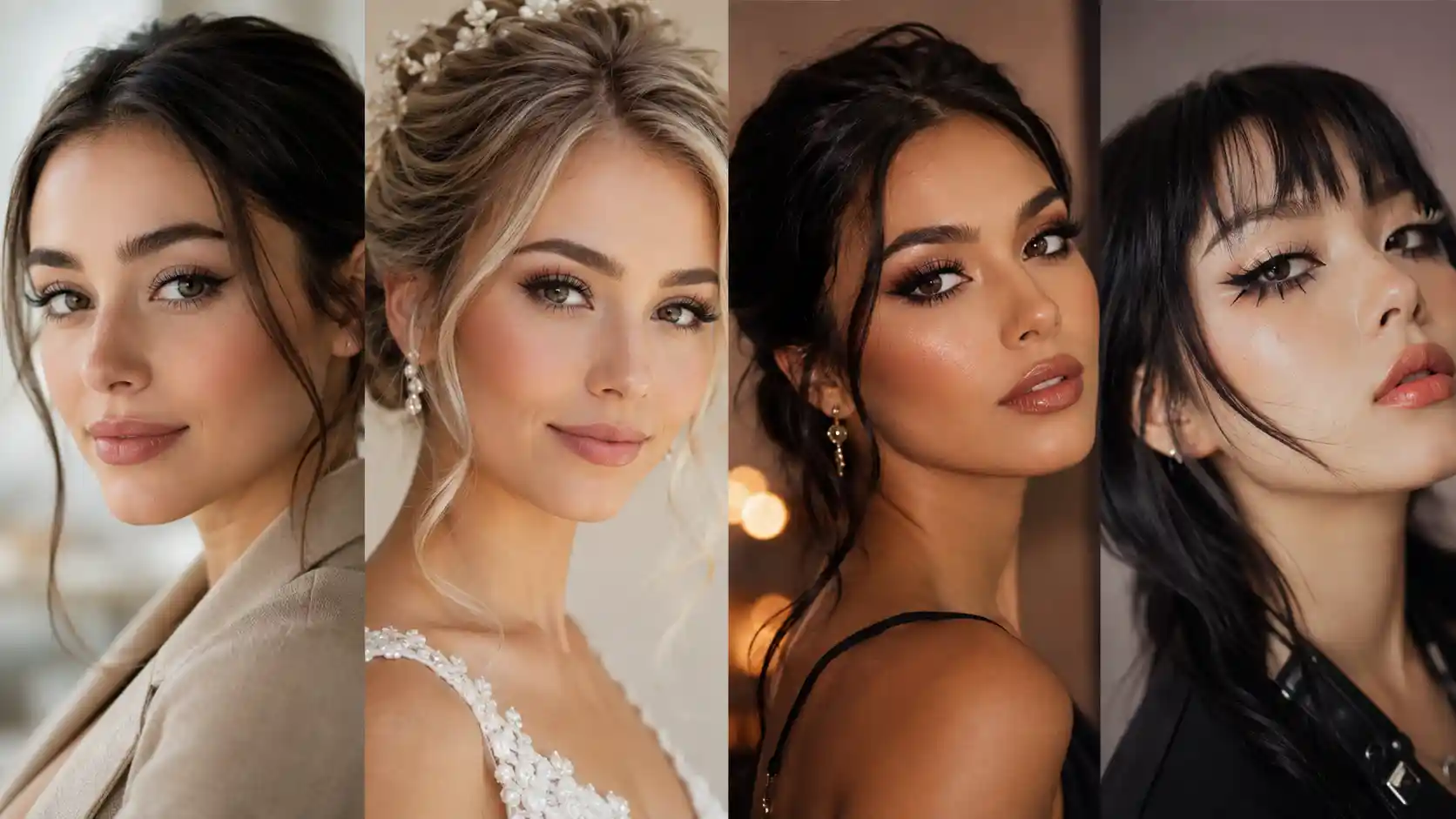
How Do You Match Lash Extension Styles to an Occasion?
A lash design has several layers. Application type describes construction: classic uses one extension on one natural lash, volume uses a fan, and hybrid combines both. A lash map describes length placement across the eye. Cat-eye and doll-eye are maps; wispy and spiky describe texture. Curl, length, color, and finish refine the result.
Each label describes a separate part of the design.
Begin with the impact the occasion requires, then choose an application type for that density. After checking the eye shape and natural lashes, the artist can adapt the map and texture. A reference photo communicates the target.
Quick Occasion-to-Style Comparison
| Occasion | Recommended starting style | Visual direction | Adjustment question |
|---|---|---|---|
| Everyday or work | Classic or soft hybrid | Clean definition or light texture | How subtle should the set look? |
| Wedding or formal event | Wispy hybrid or volume | Soft texture with added fullness | How much presence is needed in photographs? |
| Party or nightlife | Volume, cat-eye, or colored lashes | Stronger density, elongation, or color | Is the priority fullness, shape, or color? |
| Photoshoot, stage, or creative event | Spiky or anime style | Graphic, separated texture | What must the lashes communicate on camera or stage? |
Everyday and Work: Classic or Soft Hybrid Styles
Classic lashes suit a polished, restrained brief. One extension is applied to one natural lash, so individual placement follows the lash line and adds definition. Length, curl, and map still change the visible effect. In a conservative design, texture remains secondary.
Artists sourcing this application type can review the classic lash collection while planning a work-appropriate set.
Soft hybrid works when classic looks too even or sparse for the brief. It mixes individual extensions with volume fans, adding texture in selected areas. Hybrid describes the construction. “Soft” signals the intensity, while fan density, length, and placement control visibility.
Weddings and Formal Events: Wispy Hybrid or Volume
For weddings, wispy hybrid builds texture through visible peaks and softer spaces. Varied lengths create this wispy pattern. Hybrid construction gives the artist individual extensions and fans to shape it. The map should follow the eye, with the style label serving as a visual reference.
Volume suits a client who wants a fuller formal or photo-ready result. Fans build that fullness, while fan design, length, curl, and coverage determine the finish. The artist should agree on the intensity before selecting from volume lash options.
A reference image can clarify whether the client means soft fullness, visible wisps, or a darker lash line.
Parties and Nightlife: Volume, Cat-Eye, or Colored Lashes
Party lashes can carry a stronger visual choice. Volume adds fullness. A cat-eye map places longer lengths toward the outer area, creating an elongated direction. The two can be combined and still serve separate design jobs.
Color adds another layer.
A full colored set makes color central; selective placement makes it an accent. The colorful lash range is relevant when the event brief includes color. The artist still decides where the shade appears and how it works with the map.
Shape or color can give a lighter set more impact. Clarify this during consultation: “dramatic” may mean a longer outer corner to one client and bright color to another.
Photoshoots, Stage, and Creative Events: Spiky or Anime Styles
Spiky styles create separation through noticeable peaks. Anime styles push that rhythm further with distinct sections of length and space. Both labels describe texture. Classic, hybrid, or volume techniques may build the effect.
The visual brief should lead.
For a close portrait, spacing and peak placement may matter most. A stage concept may call for a bolder silhouette. Identify what the lashes need to communicate, then adapt length, curl, density, and map to the client.
How Do Popular Lash Extension Styles Compare?
Classic: one extension is applied to one natural lash. It creates definition; curl and length control visibility.
Volume: fans are used to build fullness. The term names the application type; fan design and placement determine the density and finish.
Hybrid: classic extensions and volume fans are combined for texture, fill, and individual definition.
Wispy: varied lengths form visible peaks. Wispy texture can be created within hybrid or volume work.
Cat-eye: longer lengths move toward the outer area. This map can use classic, hybrid, or volume application.
Doll-eye: longer lengths sit nearer the center, creating an open, centered direction. Application type and fan design control density.
Spiky or anime: separated peaks create a graphic rhythm. The degree of contrast depends on the spacing and length changes in the design.
Colored: color changes the finish and can cover the set or appear as an accent. The map and application type remain separate design choices.
What Should You Check Before Choosing a Style?
Start with the natural lashes and eye shape. They set the conditions for length, curl, placement, and density. Adapt the desired style to those conditions and the occasion.
Describe the occasion in concrete terms. Should the result look restrained, show in photographs, elongate the eye, or feature texture or color? These details give the artist a clearer brief than “natural” or “dramatic” alone.
Choose the application type, then the map, texture, curl and length, and color or finish. Popular lash extension styles become easier to compare when each layer has a defined job.
Acerca de ESSI LASH
ESSI LASH supplies professional lash product categories including classic lashes, volume lashes, easy fan lashes, premade fans, flat lashes, and colorful lashes. This range gives lash artists several construction and finish options for occasion-led designs.
Product selection still depends on the intended technique and visual brief. Artists who need details about a category or order can use the product inquiry to contact the company.
Preguntas frecuentes
These answers focus on the practical choices clients and lash artists make during an occasion-led consultation.
Q1: What is the most popular lash extension style?
A: The most useful style varies by client and occasion. Classic, volume, and hybrid are recurring application types, while cat-eye and wispy describe other design layers. The choice should match the requested intensity, eye shape, and natural lashes.
Q2: Which lash extension style is best for a wedding?
A: Wispy hybrid or volume is a practical starting point for soft texture and formal fullness. Confirm whether the priority is visible wisps, a darker lash line, or overall fullness, then adjust the map, curl, and length.
Q3: What lash extension style looks most natural for work?
A: Classic is the clearest starting point for restrained definition because it uses one extension on one natural lash. Soft hybrid adds light texture. Length, curl, and map should support the requested subtlety.
Q4: What is the difference between cat-eye and doll-eye lashes?
A: Cat-eye directs longer lengths toward the outer area; doll-eye emphasizes them nearer the center. Both are maps. Either can use classic, hybrid, or volume techniques, subject to the client’s eye shape and natural lashes.
Q5: How should a lash artist choose a style for a special occasion?
A: Ask what the lashes need to do: remain subtle, show in photographs, elongate the eye, add fullness, or support a creative concept. Check the natural lashes and eye shape. Then choose application type, map, texture, curl and length, and color or finish as separate decisions. Use the reference image as the target and adapt the final set to the client.

 English
  Spanish