






The right eyelash extension kit depends on the user, service, and replenishment plan. A DIY cluster kit, professional starter kit, salon restock, and private-label bundle each serve a different purchasing task.
For an inquiry, define the application plan, lash format, adhesive workflow, tools, consumables, quantity, and packaging.
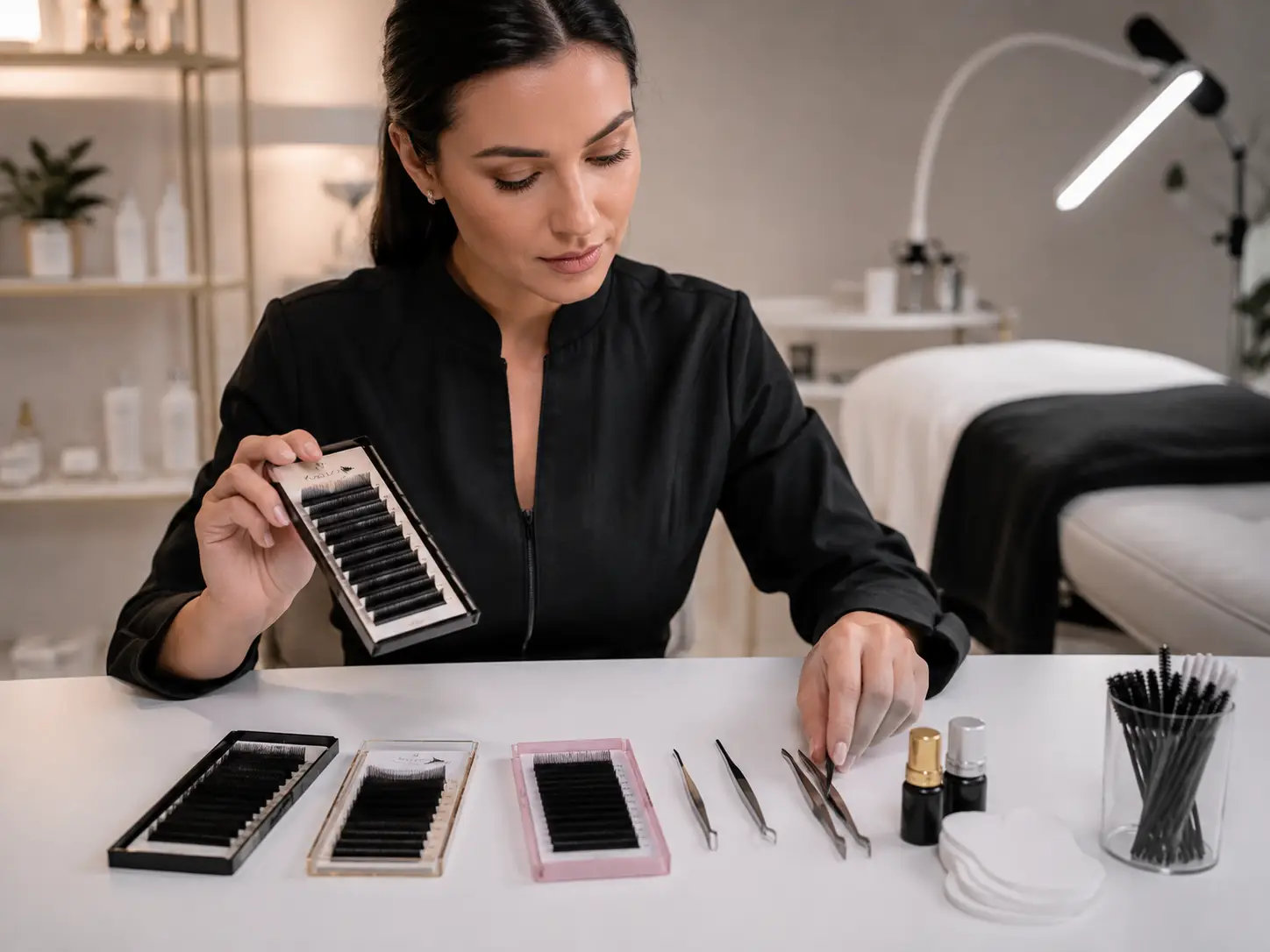
What Kind of Eyelash Extension Kit Do You Need?
The phrase “eyelash extension kit” covers several product paths. DIY kits often focus on clusters, bond-and-seal products, or an applicator. Beginner kits may add a mannequin head and practice materials. Professional kits combine lash trays with adhesive, preparation products, tools, and disposables. Wholesale and private-label orders add packaging, samples, labeling, and replenishment requirements.
Compare the starter kit category after defining the user and service.
Quick Kit-Type Comparison
| User or project | Kit direction | Contents to confirm | Inquiry focus |
|---|---|---|---|
| DIY user | Cluster or at-home kit | Clusters, bond or adhesive, seal, applicator | Application method and use instructions |
| Student or beginner artist | Practice or starter kit | Practice head, lash trays, tweezers, adhesive, pads, tape | Training level and first service style |
| Lash artist or salon | Professional working kit | Lash formats, adhesive system, prep, remover, tools, disposables | Daily service mix and replenishment |
| Brand or distributor | Wholesale or private-label bundle | Selected products, samples, labels, cases, cartons | Target market, quantity, packaging and documents |
Confirm that the products and instructions match the intended application. Professional semi-permanent extensions require trained handling and a controlled adhesive workflow.
Which Lash Format Should the Kit Include?
Select the lash format from the planned service. Classic lashes use one extension on one natural lash; volume lashes use fans to build density. Easy-fan and premade-fan formats support different workflows, flat lashes create a separate profile, and colorful lashes change the finish.
Diameter, curl, length, tray format, and application method affect the result. “Complete” does not define those specifications. Existing ESSI LASH research records 0.15 classic, 0.07 volume, and 0.05 easy-fan formats as product examples. Use them as discussion references and confirm the exact configuration.
Review the eyelash extension product range when building a style-specific inquiry.
Material also influences selection. The Beitiya knowledge base describes silk-protein fibers as lightweight with shape stability, faux-mink and natural-mink fibers as soft with a natural appearance, and artificial fibers as consistent in shape and curvature. Use these descriptions in a comparison brief.
What Should Be Inside a Professional Eyelash Extension Kit?
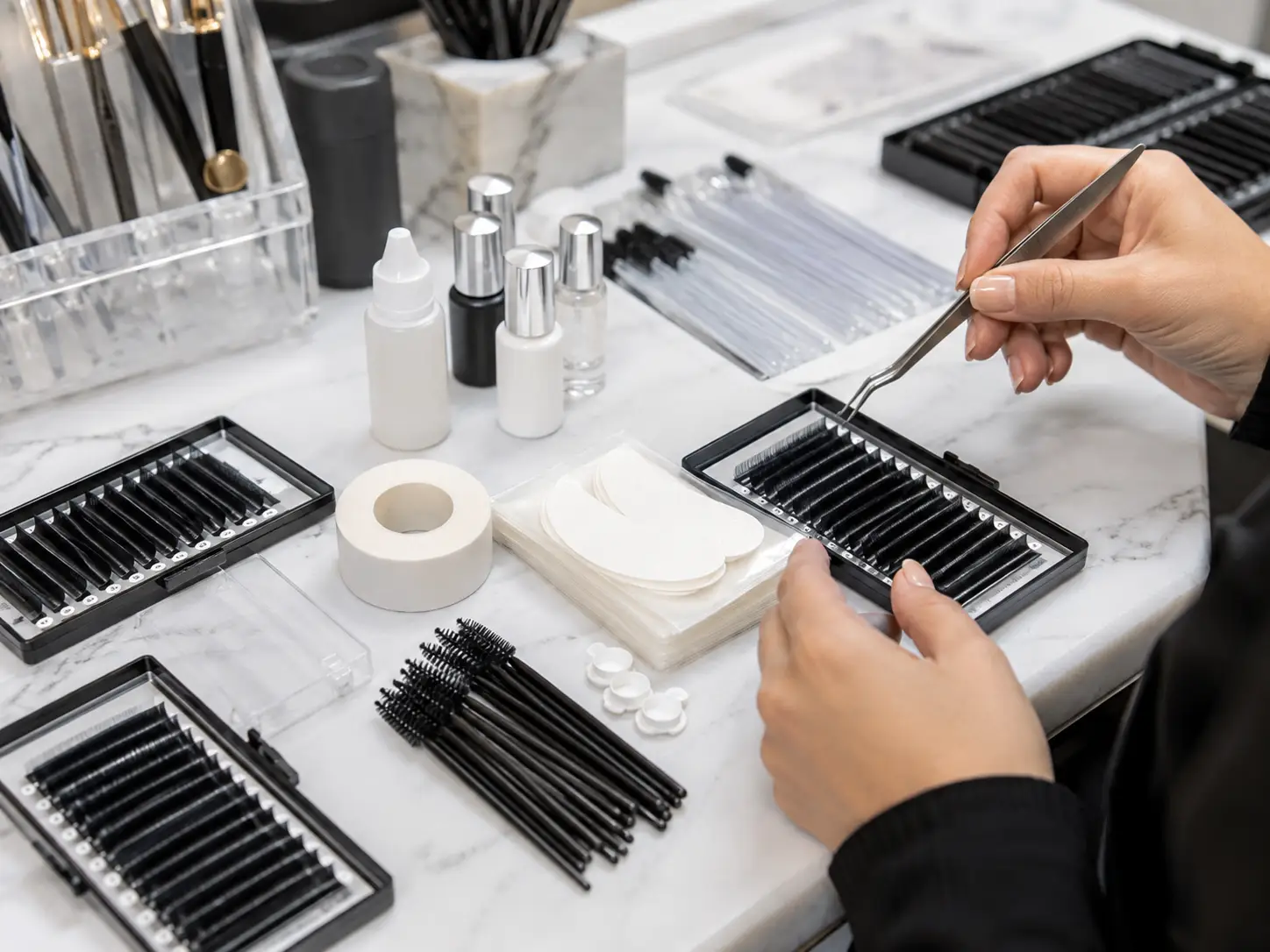
A professional kit should match the application workflow. Lash trays provide fibers, adhesive creates the bond, primer and cleanser prepare the lash area, and remover and bonder support later steps. Tweezers, eye pads, tape, microswabs, brushes, and disposables support placement.
Some items are style-dependent. Volume may require different formats and tools from classic work. Practice heads suit students; packaging and spare consumables support repeat salon or brand supply.
ESSI LASH groups Starter Kit, Tweezers, Accessories, Eyelash Extensions, and Adhesive/Bonder/Primer/Remover/Cleanser as separate product categories. The professional lash tweezers category can help you separate reusable tools from consumables when preparing a request.
Ask the supplier to identify included, optional, and replenishment items.
How Should You Choose Adhesive and Application Supplies?
Adhesive selection follows the artist’s working speed, the lash type, the room conditions, and the product instructions. Setting time is one input. It does not replace a review of temperature, humidity, storage, preparation, and application technique.
The ESSI LASH product pages list Gold+ with a 0.1-second setting time, Silver+ and Transparent Glue with 1–2-second options, and Gentle Glue with a 2–3-second option. These are product-specific listed ranges. A supplier should confirm the current instructions and the conditions for the exact formula requested.
Primer, cleanser, remover, and super bonder serve different steps. Identify whether the request covers a full workflow or selected replacements.
For a professional order, send placement speed, lash format, room temperature and humidity range, storage plan, and service setting.
What Changes for Salon, Wholesale, and Private-Label Orders?
Salon orders center on repeat use. State the weekly or monthly service pattern, the lash styles used most often, and the items that need regular replenishment. A supplier can then separate a starter purchase from a restock schedule.
Wholesale and private-label projects add commercial requirements. The Beitiya knowledge base describes an ODM process that can include demand communication, market research, product development, samples, bulk production, packaging, testing, logistics, and after-sales support. These stages require a product brief before quotation.
Send the target market, user group, formats, diameters, curls, lengths, adhesive preferences, packaging, labels, quantity, destination, and document requirements. Samples should represent the final specification.
ESSI LASH states on its official products page that it supplies lash extensions, accessories, and private-label packaging, and has cooperated with more than 1,500 lash businesses worldwide. Confirm current order terms, availability, documentation, and packaging in the quotation.
How Do You Compare Two Eyelash Extension Kits?
Compare the kits against the same service plan. Use the checklist below before requesting a price.
| Checkpoint | Information to record |
|---|---|
| User and service | DIY, student practice, lash artist, salon, distributor, or private label |
| Lash specification | Classic, volume, easy-fan, premade-fan, flat, or colorful; diameter, curl, length and tray format |
| Adhesive workflow | Formula, listed setting-time range, room conditions, storage and preparation products |
| Tools and consumables | Tweezers, pads, tape, brushes, microswabs, remover, bonder and disposables |
| Commercial scope | Sample quantity, order quantity, packaging, labels, cartons, destination and required documents |
Use a matched comparison. Record included items, additions, and open specifications.
How Should You Request the Right Kit Recommendation?
Write the inquiry as a short technical brief. Name the user group and service, then add lash formats, diameter, curl, length range, adhesive preference, room conditions, tools, consumables, quantity, packaging, destination, and sample needs.
Include reference images or a product code when the visual result must match a current line. State whether the order is for training, salon work, wholesale distribution, or private label. Ask for a component list, specification sheet, sample plan, packaging scope, and quotation assumptions.
This brief shows which decisions require product guidance.
Conclusión
The perfect eyelash extension kit matches the operator, application style, working environment, and purchase scale. Start with the service. Then confirm lash specifications, adhesive conditions, tools, consumables, packaging, and replenishment.
ESSI LASH publishes categories for eyelash extensions, starter kits, tweezers, accessories, and adhesive-related products. Its official products page also describes private-label packaging and cooperation with more than 1,500 lash businesses worldwide. Share your target market, product mix, specifications, quantity, and packaging requirements through a custom lash kit inquiry to request product guidance or a quotation review.
Preguntas frecuentes
Q1: What should be included in an eyelash extension kit?
A: A professional kit commonly needs lash trays, adhesive, preparation products, tools, eye pads, tape, brushes, microswabs, remover, bonder, and disposables. The exact contents depend on the application style and whether the kit supports training, salon work, or replenishment.
Q2: What is the difference between a DIY lash kit and a professional eyelash extension kit?
A: A DIY kit is usually built around clusters, bond or seal products, and a simple applicator. A professional kit supports a trained application workflow with lash trays, adhesive, preparation, isolation tools, and service consumables. Confirm the intended use before comparing the two.
Q3: Which lash type should a beginner choose for a starter kit?
A: Classic lashes are a clear starting format because one extension is placed on one natural lash. A student who plans to train in volume should request volume or easy-fan materials instead. The kit should match the technique being practiced, including the diameter, curl, length, and tool setup.
Q4: How should adhesive be chosen for an eyelash extension kit?
A: Choose adhesive after reviewing artist speed, lash format, room temperature, humidity, storage, and product instructions. ESSI LASH lists products with setting-time options from 0.1 second to 2–3 seconds, depending on the formula. Confirm the current conditions for the exact adhesive before adding it to a kit.
Q5: What information should a buyer send when requesting a custom lash kit?
A: Send the target market, user type, application style, lash diameter, curl, length range, adhesive preference, room conditions, quantity, packaging, destination, sample needs, and required documents. A supplier can return a component list and quotation assumptions for review.

 English
  Spanish