






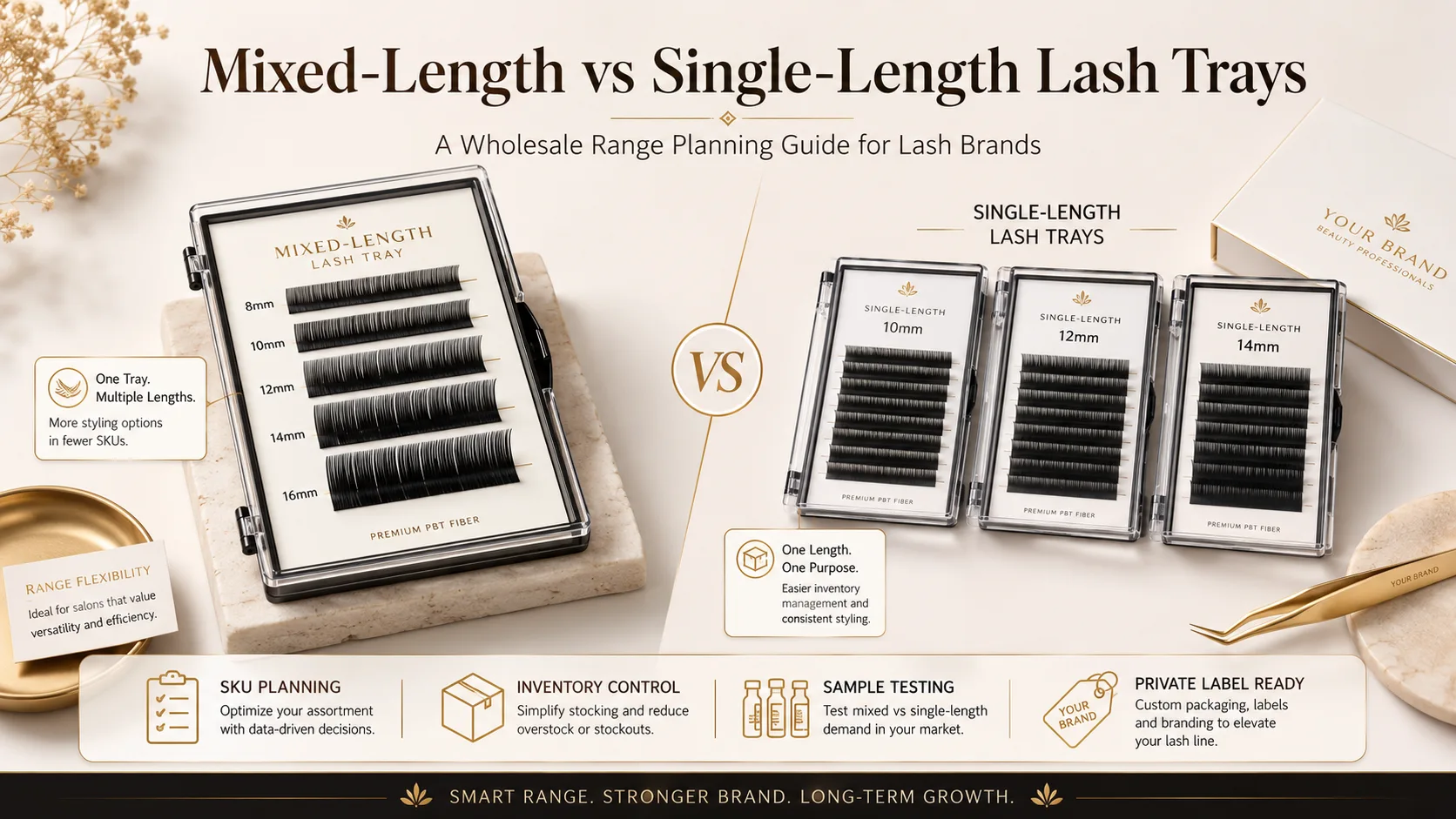
La elección entre bandejas de pestañas de longitud mixta y de longitud única afecta la cantidad de referencias, la profundidad del inventario, la precisión de los pedidos y el capital inmovilizado en productos de baja rotación. La pregunta clave es si la demanda aún está en fase de prueba o si es lo suficientemente predecible como para permitir el reabastecimiento con longitudes exactas.
Una gama controlada suele comenzar con bandejas mixtas, a las que luego se añaden bandejas de una sola longitud para las longitudes de uso frecuente comprobadas. Esto limita las variaciones innecesarias de curvatura, diámetro, longitud y presentación.
Bandejas de pestañas de longitud mixta o de longitud única: una decisión de compra rápida
|
Condiciones de compra |
Bandejas de diferentes longitudes |
Bandejas de una sola longitud |
|
Datos de demanda |
Limitado |
Estable |
|
Número inicial de SKU |
Más bajo |
Más alto |
|
Uso principal |
Pruebas y mapas flexibles |
Reposición precisa |
|
Riesgo principal |
Longitudes no utilizadas de baja demanda |
SKU individuales con exceso de existencias |
|
Comprador típico |
Nueva marca, academia, pequeño salón |
Salón establecido, distribuidor |
Elija bandejas de longitud mixta cuando la demanda sea incierta.
Las bandejas de pestañas de longitud mixta son ideales para un primer pedido al por mayor, una prueba de curvatura o diámetro, una gama de entrenamiento o un salón que necesita varias longitudes sin un gran inventario. Reducen la cantidad de referencias disponibles, pero no eliminan el desperdicio.
Si se utilizan repetidamente dos longitudes intermedias mientras que las demás filas permanecen sin tocar, es posible que la bandeja deje de funcionar correctamente. Antes de realizar el pedido, confirme el rango completo de longitudes, el número de filas, las filas asignadas a cada longitud, la disposición de las tiras y si la asignación se puede repetir.
Registre qué filas se agotan primero. El agotamiento repetido de las mismas longitudes es una señal práctica de que puede ser necesario tener existencias de reserva de una sola longitud.
Elija bandejas de una sola longitud cuando se demuestre la demanda de reposición.
Las bandejas de una sola longitud son ideales para compradores que saben qué especificaciones varían con frecuencia. Permiten una reposición precisa y la repetición de pedidos.
Son menos adecuados cuando los datos de demanda son escasos. Cada combinación de familia de productos, curvatura, diámetro, longitud y embalaje puede convertirse en una referencia de producto independiente.
Cada longitud debe convertirse en una referencia individual solo cuando las ventas, el uso por parte de los artistas o los pedidos de los distribuidores demuestren una demanda estable. Confirme si la cantidad mínima de pedido (MOQ) se aplica a cada longitud, a cada diseño de caja o al pedido combinado.
¿Por qué ocurren los problemas de inventario en las bandejas de pestañas?
¿Por qué las bandejas mixtas pueden dejar longitudes sin usar?
El agotamiento desigual es el principal riesgo de las bandejas mixtas. Un mapa de filas fijo puede no coincidir con el menú de servicio del comprador ni con la demanda regional. La causa puede ser una gama inadecuada o una mala asignación de filas.
Controle las filas restantes cuando una bandeja quede inutilizable. Si quedan longitudes específicas de forma constante, solicite un rango más reducido, repita las longitudes intermedias de mayor uso o separe los tamaños de alta rotación en bandejas individuales. La distribución mixta de las bandejas no es universal; ejemplos de productos públicos muestran que los proveedores pueden asignar un número diferente de filas a distintas longitudes.
¿Por qué las gamas de tallas únicas se expanden demasiado rápido?
El inventario de una sola pieza se expande mediante la multiplicación:
Familia de producto × rizo × diámetro × longitud × versión de embalaje = recuento total de SKU
Una vez que se abren todas las variables, puede resultar difícil mantener un rango manejable, especialmente con múltiples versiones de empaque.
Comience con un número limitado de familias de productos, tipos de rizo y diámetros. Mantenga las combinaciones de baja demanda en bandejas mixtas o pruébelas antes de convertirlas en referencias permanentes. Revise el inventario de baja rotación antes de cada expansión.
¿Qué formato de bandeja se adapta mejor a cada comprador B2B?
Las nuevas marcas blancas pueden usar bandejas mixtas para probar el tipo de producto, la curvatura, el diámetro, el rango de longitud y el empaque. Un surtido amplio de una sola longitud es difícil de justificar sin datos de ventas.
Los salones pueden usar bandejas mixtas para mapas variados y especificaciones de baja frecuencia, y bandejas individuales para longitudes que se usan repetidamente. De manera similar, las directrices del sector consideran las bandejas mixtas como material flexible y las bandejas individuales como más adecuadas cuando se conoce el uso exacto.
Las academias pueden preferir bandejas mixtas claramente etiquetadas. Los distribuidores suelen usar bandejas mixtas para pedidos con poca demanda y bandejas individuales para pedidos repetidos.
Cómo planificar la primera gama de bandejas para pestañas al por mayor
Comience con las familias de productos principales, los rizos y los diámetros.
La planificación debe comenzar con el cliente objetivo, el uso previsto del servicio, una gama de productos manejable y un número limitado de rizos y diámetros. A continuación, se debe elegir el formato de longitud y el embalaje.
Una primera gama de productos no debería abarcar todas las opciones clásicas, de volumen, de fácil uso, planas, prefabricadas y de colores, a menos que los datos de los clientes justifiquen esa amplitud.
ESSI LASH presenta estas categorías dentro de su Soluciones de extensión de pestañas al por mayor de ESSI LASH, lo que proporciona a los compradores un punto de partida para reducir la lista de productos a probar.
Establecer el rango de longitud de bandeja mixta y la asignación de filas
Una solicitud de cotización para bandejas mixtas debe indicar las longitudes inicial y final, el número total de filas, las filas asignadas a cada longitud, las longitudes repetidas, la disposición de las tiras y el texto de la etiqueta. El mapa de filas aprobado debe registrarse para la producción repetida.
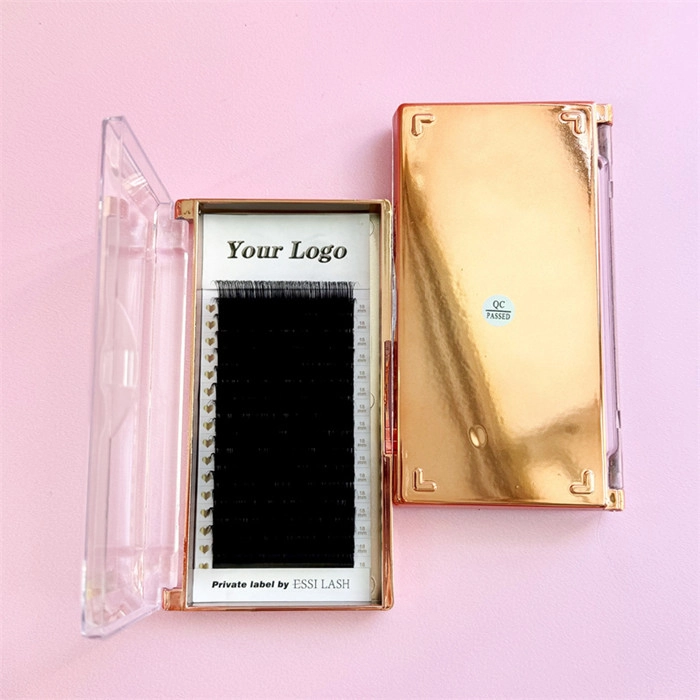
No siempre es conveniente asignar el mismo número de filas por longitud. Un salón de belleza puede consumir las longitudes medias más rápidamente, mientras que un centro de formación puede necesitar una mayor cobertura. La asignación debe reflejar la aplicación y la demanda disponible.
Un ejemplo publicado de Bandejas de pestañas personalizadas con marca propia Se ofrecen diferentes longitudes, múltiples opciones de curvatura y grosor, y embalaje personalizado. Las configuraciones exactas, la cantidad mínima de pedido y las condiciones de las muestras deben confirmarse para cada proyecto.
¿Cuándo debería una marca pasarse a las bandejas de una sola longitud?
Utilice los datos de ventas y uso para identificar longitudes comprobadas.
Entre las pruebas útiles se incluyen el agotamiento de filas, las ventas por especificación, los registros de uso, las solicitudes repetidas y las longitudes sobrantes. Una longitud se convierte en una candidata más sólida cuando se agota repetidamente antes que la otra.
Separe los datos por curvatura y diámetro. La demanda de una longitud específica no justifica que dicha longitud se utilice en toda la gama. Las longitudes de baja frecuencia pueden mantenerse mezcladas hasta que la demanda se estabilice.
Configurar los activadores de reordenamiento antes de agregar SKU.
Antes de agregar una referencia de una sola longitud, defina su punto de reorden, nivel mínimo de existencias, registro de plazo de entrega y regla de revisión de existencias lentas.
El proveedor debe confirmar si los pedidos repetidos pueden cumplir con las especificaciones aprobadas para pestañas, tiras, bandejas, etiquetas y empaques. La cantidad mínima de pedido (MOQ) y las condiciones de reordenamiento pueden variar según la configuración y deben confirmarse por escrito.
Cómo probar muestras de bandejas de pestañas antes de realizar un pedido al por mayor
Compare ambos formatos utilizando el mismo tipo de producto, fibra, acabado, curvatura, diámetro, tira y construcción de la bandeja. De lo contrario, alguna otra diferencia en las especificaciones podría distorsionar el resultado.
Verifique la recogida y liberación, los residuos de la tira, la consistencia del rizado, la precisión de la longitud, el número de filas, la asignación de longitudes mixtas, la precisión del etiquetado, el estado de la bandeja y la protección del embalaje. Los comentarios deben provenir de usuarios representativos.
Conserve la versión aprobada como muestra de referencia y, a continuación, compare las unidades del pedido piloto con ella. ESSI LASH también ofrece minibandejas personalizables de cuatro y seis filas que pueden facilitar las pruebas antes del envasado a tamaño completo.
Cómo el embalaje y las etiquetas previenen errores en los pedidos
La etiqueta de una bandeja mixta debe mostrar el rango completo de longitudes, mientras que la de una bandeja individual debe indicar la longitud específica de inmediato. La etiqueta y el registro SKU interno deben identificar el tipo de producto, la curvatura, el diámetro, el formato de longitud, el número de filas, el SKU interno, la referencia del lote y la versión del empaque.
No se fíe únicamente del color de la caja; compruebe conjuntamente el diseño, las etiquetas y las muestras.
Cómo elegir un proveedor mayorista de bandejas para pestañas
Un proveedor adecuado debería analizar tanto las especificaciones como la estructura del inventario. Pregunte sobre formatos mixtos e individuales, asignación de filas, etiquetas y cajas.
Aclare la cantidad mínima de pedido (MOQ) por producto, SKU, formato de bandeja y versión de empaque. Pregunte cómo se gestionan las muestras, los pedidos repetidos, los errores de etiquetado, los daños y las diferencias en las especificaciones.
Compañía de Productos de Belleza ESSI de Qingdao, Ltd. Describe su actividad comercial centrada en productos para pestañas, accesorios y envases de marca blanca. Su información de servicios incluye impresión de logotipos, opciones de empaque, personalización de productos y asistencia con muestras. La disponibilidad y las condiciones específicas para cada proyecto aún requieren confirmación.
Conclusión
Las bandejas de longitud mixta son prácticas para evaluar la demanda y controlar la gama inicial de productos. Las bandejas de longitud única resultan más útiles cuando las longitudes de mayor consumo se ven respaldadas por datos de ventas o uso recurrentes. Ninguno de los formatos evita el desperdicio a menos que el comprador controle la asignación de filas, el etiquetado, las muestras y las reglas de reordenamiento.
Los compradores pueden Solicita un presupuesto para una bandeja de pestañas personalizada. con la familia de productos, rizo, diámetro, formato de longitud mixta o única, rango de longitud, asignación de filas, concepto de embalaje, cantidad de muestra, cantidad estimada de pedido y mercado de destino.
Preguntas frecuentes
¿Son las bandejas de pestañas de longitud mixta una mejor opción para una nueva marca de pestañas?
Suelen ser adecuadas cuando la demanda aún está en fase de prueba, ya que permiten evaluar varias longitudes con un menor número de referencias. El comprador debe confirmar el mapa de filas y controlar las longitudes no utilizadas.
¿Cuándo debería un salón comprar bandejas de pestañas de una sola longitud?
Téngalos en cuenta cuando las mismas longitudes se agoten repetidamente primero y los registros de uso muestren una demanda de reposición predecible.
¿Las bandejas de pestañas de una sola longitud requieren más inventario?
Por lo general, cada combinación de tipo de producto, curvatura, diámetro, longitud y embalaje puede convertirse en una referencia de producto (SKU) independiente.
¿Cuántas referencias de bandejas para pestañas debería lanzar primero una marca?
No existe una cifra universal. Empiece por el cliente objetivo, una familia de productos básicos y un número limitado de rizos y diámetros, y luego amplíe la gama según la demanda recurrente.
¿Qué deberían probar los compradores antes de pedir bandejas para pestañas al por mayor?
Verifique la recogida, la liberación de la tira, el rizado, la longitud, el número de filas, la asignación de filas mixtas, el etiquetado, el estado de la bandeja, el embalaje y la consistencia con respecto a una muestra aprobada.

 English
  Spanish