





Salon-applied eyelash extensions should be removed by a trained lash professional. The adhesive sits close to the eyelid, and forceful removal can stress both the natural lashes and the eye area.
That is the short answer.
The next step depends on what you are wearing and whether your eyes feel normal. This guide covers salon-applied individual extensions. Temporary strip lashes and DIY clusters follow their own product instructions.
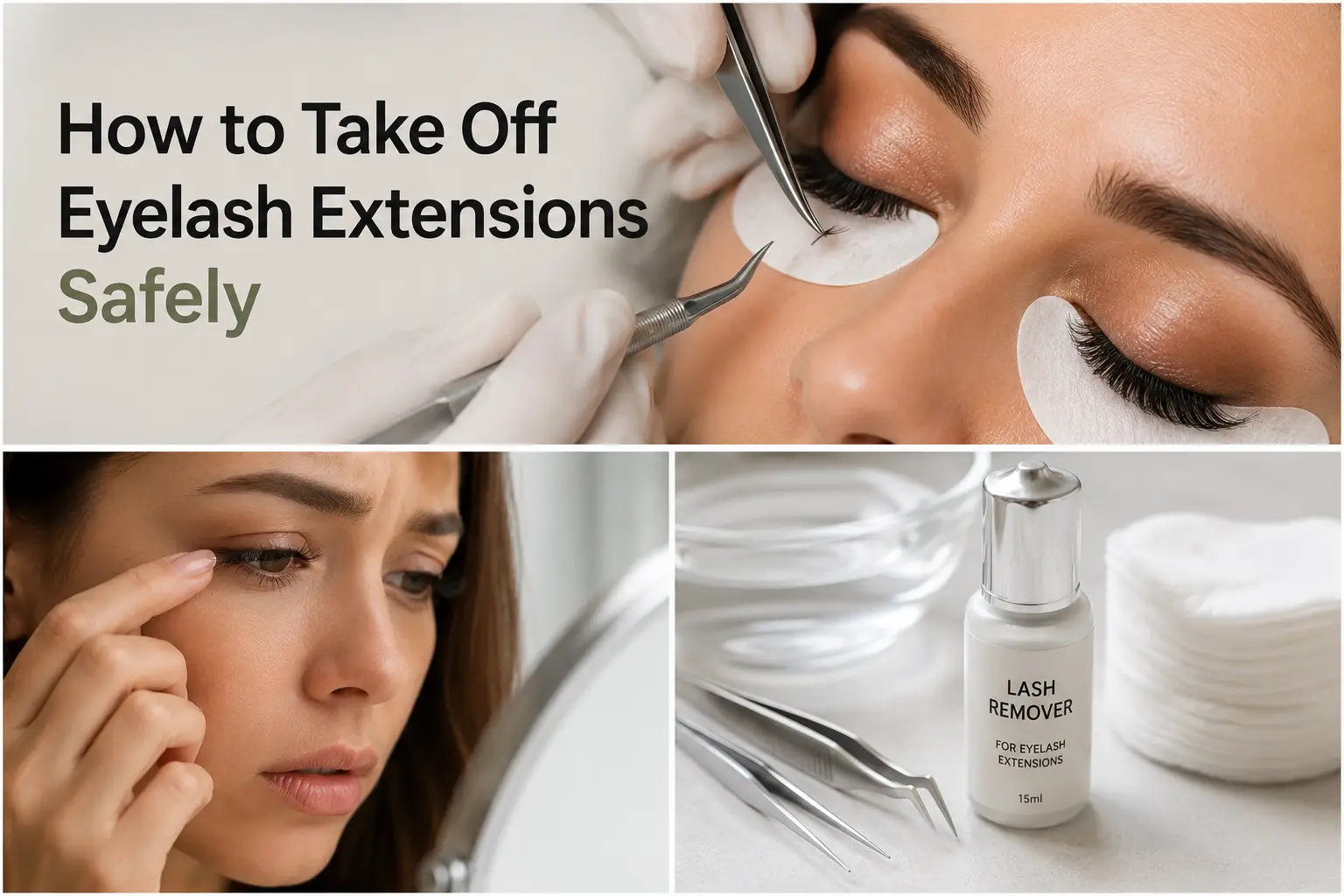
Should You Take Off Eyelash Extensions at Home?
Start by identifying the lash system. Similar-looking products can use different adhesives, wear periods, and removal directions.
First Identify the Type of Lashes You Are Wearing
A classic eyelash extension is one extension attached to one natural lash. Volume and premade-fan sets also use individual attachment points. Natural lashes continue through their growth and shedding cycle during wear.
A strip lash follows the eyelid and is removed after makeup wear. DIY-cluster directions depend on their adhesive system. Packaging or appointment records can identify the product. When the type is unclear, ask the person who applied it.
Why Professional Removal Is the Default for Salon Extensions
A trained lash professional can inspect the attachment points, choose a remover intended for the adhesive system, and work while your eyes stay closed. The process needs controlled placement and a clear view of the natural lashes.
An extension may remain bonded when it looks grown out or crooked. Picking, twisting, or peeling adds mechanical force to the attached hair and nearby skin.
What Happens During Professional Eyelash Extension Removal?
Professional removal aims to release the adhesive bond so the extension separates with minimal force on the natural lash. The product and procedure depend on the adhesive and the manufacturer’s instructions.
The Goal Is to Release the Adhesive Bond
An eyelash extension remover releases extension adhesive. It belongs at the bonded area, with the eye protected and closed. The lash professional monitors the bond and controls the product.
Processing time is product-specific. The operator should follow the current directions for the remover and adhesive in use.
Why Cream and Gel Removers Are Professional Products
Cream and gel describe the remover’s physical format. Texture affects product placement, while compatibility and processing time depend on current instructions. ESSI LASH lists both formats among its eyelash extension remover options.
Product selection requires the label, intended-use statement, and current instructions. The operator keeps remover confined to the attachment area. Eye exposure becomes an eye-safety incident.
What Can You Do While Waiting for a Removal Appointment?
The practical goal is simple: keep the lash line clean and avoid extra force until a professional can assess the set.
| Situation | Practical response | Boundary |
|---|---|---|
| Extensions look uneven or grown out | Arrange removal and continue gentle care | Leave loose-looking fibers alone |
| One extension twists or catches | Ask the lash professional to inspect it | Keep tweezers away from the attachment |
| The lash line has daily buildup | Use the approved cleanser and light technique | Keep pressure controlled |
| Pain, marked swelling, discharge, vision change, or strong light sensitivity occurs | Seek prompt healthcare assessment | Treat this as an eye issue |
Leave Attached Extensions Alone
Do not pull, pinch, twist, or scrape attached extensions. Keep household tweezers away from individual bonds. Close work around your own lash line gives you a limited view.
Loose-looking does not always mean detached.
Keep the Lash Line Gently Clean
Continue the compatible cleansing routine supplied by your lash artist. Use light movements. Rough towel contact, hard rubbing, and forceful brushing add mechanical stress.
This waiting period is a poor time to test a new household remover. The current evidence set does not confirm compatibility between those products and the adhesive used on your set.
Let Naturally Shed Extensions Separate on Their Own
Natural lashes continue to shed during wear, and an attached extension can leave with a shedding lash. Gentle washing may release an already detached fiber.
There is no universal timetable for a full set to disappear. Lash cycles, set condition, and attachment history vary. If you need the complete set removed for comfort, appearance, or another appointment, schedule professional removal.
Which Popular Removal Methods Need Caution?
Search results mention oil, steam, water, petroleum jelly, professional remover, and tools. Search frequency does not establish a universal procedure.
Oil, Steam, Water, and Petroleum Jelly
The approved source set does not show that oil, steam, water, or petroleum jelly reliably releases every extension adhesive. It also does not provide a universal home sequence for applying these materials near the eye.
The adhesive and the intended use of any product matter. Ask the lash professional who performed the service or follow the documented instructions for the identified lash system.
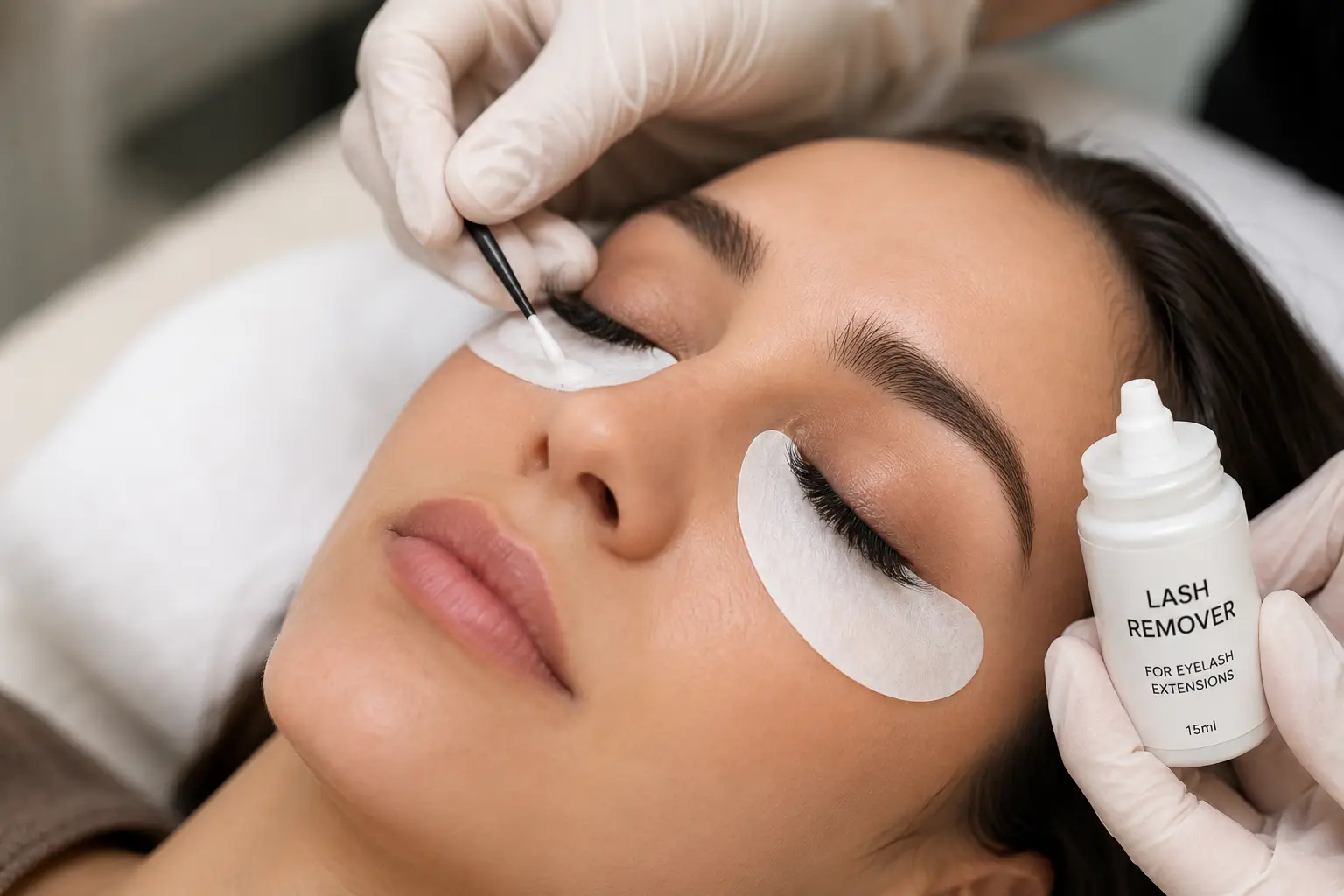
Professional Remover Requires Trained Handling
The word “professional” describes the intended operator and controlled service setting. It does not turn a remover into a consumer product. ESSI LASH groups removers with its adhesive and bonder product range, which gives lash professionals product context for application and removal workflows.
Self-application creates a control problem: the eye must remain closed while product is placed close to the bond. Product in the eye, a stuck eyelid, or continuing irritation requires qualified advice.
Tweezers, Scraping, and Forceful Separation
Tweezers and scraping tools add concentrated force near the eyelid and can catch a bonded natural lash. Keep tools away from the attachment points.
When Do Eye Symptoms Need Prompt Attention?
Routine removal advice applies when the eye area feels normal. Symptoms change the priority from appearance to assessment.
Symptoms That Require Healthcare Assessment
Persistent pain, marked swelling, unusual discharge, vision changes, strong light sensitivity, or continuing irritation call for prompt healthcare assessment. Share the product packaging or ingredient list when available.
Redness, itching, watering, swelling, and discomfort can relate to adhesive, tape, eye pads, cleanser, remover, or an existing eye condition. A healthcare professional identifies the cause. The American Academy of Ophthalmology provides guidance on care for irritation or infection associated with eyelash extensions.
Product Exposure Is an Eye-Safety Issue
Keep hands and tools away from dried material and a stuck eyelid. The 2018 ophthalmic review by Moshirfar and colleagues, indexed by the U.S. National Library of Medicine, documents mechanical and chemical complications associated with extension procedures and removal.
An eye doctor can assess pain, vision changes, swelling, and continuing symptoms. A lash professional can provide product information.
How Should You Care for Natural Lashes After Removal?
Post-removal care should keep friction low and make the lash line easy to inspect. The available sources do not support a fixed recovery or regrowth schedule.
Use a Gentle, Low-Friction Routine
Clean the eye area gently. Pat it dry and keep friction away from the lash line. Seek qualified care for continuing redness, swelling, discharge, or discomfort.
Natural lashes may look different after a dense set is removed because the set added length and fullness. Appearance alone does not establish lash damage.
Review the Previous Set Before Booking Another
Discuss comfort, placement, cleansing, and symptoms before another application. ESSI LASH’s professional eyelash extension range includes classic, volume, easy-fan, premade-fan, flat, and colorful formats for professional selection.
If the previous service caused persistent eye symptoms, obtain medical guidance before arranging another eye-area procedure.
Conclusión
The safest answer to how to take off eyelash extensions starts with correct identification. Salon-applied individual extensions call for trained removal. While you wait, keep the lash line gently clean, leave attached bonds alone, and move persistent eye symptoms to qualified medical care.
Qingdao ESSI Beauty Products Co., Ltd. supplies eyelash extensions, adhesives, bonders, primers, cleansers, and removers through ESSI LASH. Lash professionals and product buyers can Contacta con ESSI LASH with the remover format, adhesive system, and intended professional use when requesting current product information.
Preguntas frecuentes
Q1: Can You Take Off Eyelash Extensions at Home?
Salon-applied individual extensions should be removed by a trained lash professional. Strip lashes and DIY systems may follow different removal directions, so identify the product and adhesive before acting.
Q2: Can Oil Remove Eyelash Extensions?
The available approved sources do not establish oil as a universal remover for every eyelash extension adhesive. Ask the lash professional who applied the set and avoid pulling when a bond remains attached.
Q3: Why Should You Avoid Pulling Eyelash Extensions?
Pulling transfers force through the extension to the attached natural lash and nearby eye area. A fiber that looks loose can still have an active bond, so leave it for professional assessment.
Q4: Should You Remove Lash Extensions or Let Them Shed Naturally?
Book professional removal when you need the complete set taken off. Extensions can also leave as attached natural lashes shed, but the available sources do not support one timetable for every wearer.
Q5: What Should You Do If Your Eyes Hurt After Lash Removal?
Persistent pain needs prompt assessment from a qualified healthcare professional. Marked swelling, discharge, vision changes, strong light sensitivity, or continuing irritation also move the issue beyond routine cosmetic care. Bring the product packaging or ingredient list when available.

 English
  Spanish