





Japanese eyelash extensions are famous for their skill and very natural look, but lots of lash artists still mix them up with volume or cluster lashes. The main difference? Japanese ways improve instead of overpower, and they focus on exact work and balance with a client’s own features.
Understanding the Essence of Japanese Eyelash Extensions
Core Principles Behind Japanese Lash Techniques
Japanese eyelash extension methods come from simple ideas and careful work. Rather than going for bold volume, they aim to boost a client’s real beauty. This involves picking curls, lengths, and thicknesses that fit the natural lash line well. Each extension gets put on one by one with spot on placement to keep lash health good and prevent too much load on the natural lashes.
Another big value is ease. Extensions get applied with light materials—often 0.10–0.15mm in diameter—so clients hardly notice them after the job.
Differences from Volume and Cluster Lash Methods
When you compare to cluster lashes or volume fans, Japanese lash extensions seem more polished. Cluster lashes mean sticking several lashes together in a group, which adds heaviness and might harm natural lashes later. On the other hand, Japanese styles use classic lash extensions. They apply one extension per lash with clear separation.
Extensions need to go along the natural eyelash, 0.5mm away from the skin along the lash line. This tiny detail counts—it makes sure of comfort and stops problems like glue bother or early drop off.
Step-by-Step Guide to Applying Japanese Eyelash Extensions
Isolating and Attaching Each Lash with Precision
Grab fine tipped tweezers to separate single lashes neatly. Good separation stops lumps and lets you attach at the right angles.
Ensure the base of the extension sticks fully to the natural lash, at least 2mm. This creates a strong hold and cuts down on the chance of losing them.
Choosing the Right Curl Type for Each Client
Usual curl types include J, B, C, and D. J and B curls make a gentle lift and work great for quiet boosts. C and D curls give a more raised look, but you should pick them to match the natural lash flow.
Selecting Appropriate Diameter and Length
Go for slimmer diameters like 0.10mm or 0.12mm for that special light feel. Length ought to fit the eye shape—longer ones fit in the middle or outer edges only if they suit the client’s lashes naturally.
Applying Adhesive Correctly for Optimal Retention
Little glue works best for Japanese ways. If the lash extension sits too near the skin, the glue might leak into the skin and cause hurt. Also key: manage your work area setup. Humidity and temperature have to stay in check so your adhesive sets right.
Avoiding Common Application Mistakes
Skip lashing bent or sideways growing natural lashes—they won’t stick well. Bent eyelashes lack enough sticking area and tend to come off too soon. Plus, steer clear of odd angles for lashes; follow the 90 degree rule unless you want a cat eye style.
Lash Mapping Techniques in Japanese Eyelash Extensions
Assessing Eye Shape Before Mapping
Begin by looking at traits like monolids, almond shapes, or hooded eyes. Mapping needs to aim for evenness and to lift or widen the eye in a way that fits what’s already there.
Enhancing Natural Beauty Through Customized Mapping
Rather than piling on too much fullness, use small shifts in length and curl to highlight a client’s top features. Adjusting thickness along the lash line helps keep things balanced visually.
Popular Lash Mapping Styles in Japan
• Straight mapping with gentle tapering at corners gives a soft, elegant look.
• Central emphasis mapping offers a wide eyed, doll like appearance.
Creating Anime and Manga Inspired Lash Looks
Planning an Anime Inspired Lash Design
These styles stretch reality yet stay easy to wear. Draw out areas before you start—outer corners take longer lashes while inner spots remain shorter for strong contrast.
Applying Extensions with Strategic Spacing Techniques
Mix long and short extensions to build a pointy, wavy effect that copies manga style eyes.
Building Drama at the Outer Corners of the Eyes
Use longer classics or small volume fans at the outer third of the eye for a winged out effect.
Adding Color and Creative Accents to Lashes
Try putting in pink or purple strands just at the tips of the outer lashes. ESSI LASH offers colored lashes like Pink/Purple/Red/Blue/Green that can be used subtly for such effects.
Offering Popular Japanese Lash Styles to Clients
Features of the Cute Eye (Doll Eye) Look
Longer lengths are concentrated at the center of the eye. This opens up the eye vertically, creating a youthful, round eyed appearance.
Characteristics of the Elegant Eye Style
Lengths gradually increase from inner to outer corner. This creates a naturally tapered silhouette that elongates the eye horizontally.
Creating the Sexy Eye Effect with Lashes
Focus length and curl at the outer corners using C or D curls to create a sultry cat eye shape.
Achieving a Natural Eye Finish with Subtle Enhancements
Use classic lash extensions in lengths that mimic natural lash growth patterns. Stick to neutral curls like J or B.
Essential Tools and Products for Japanese Eyelash Extensions
Choosing High quality Lash Extension Materials
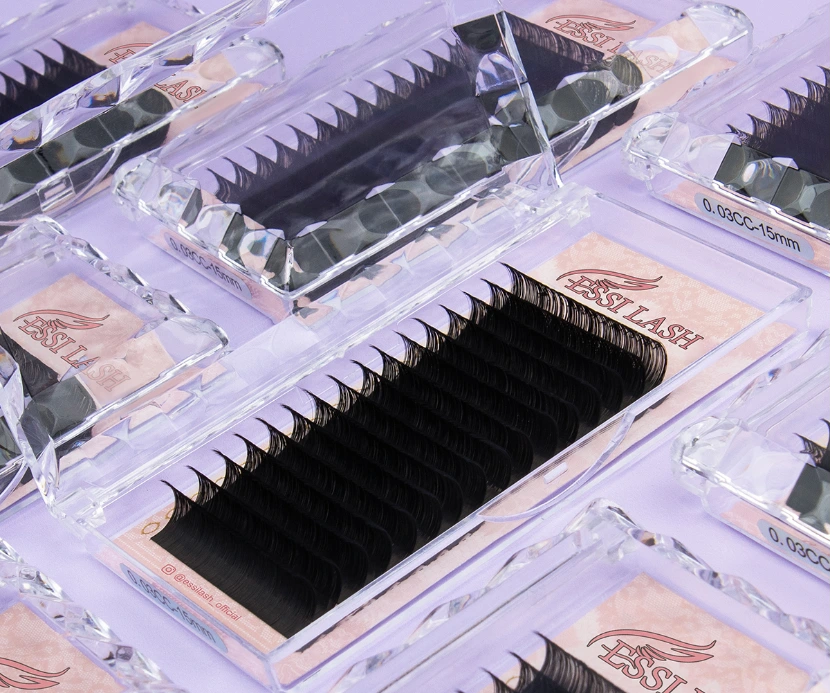
Soft synthetic fibers are ideal—they mimic real lashes without adding weight. ESSI LASH produces high end classic lashes in various curls and diameters designed for lightweight comfort and longevity.
Selecting Tweezers Designed for Precision Work
Straight tweezers are best for isolation; curved tweezers help place extensions cleanly onto isolated lashes without disturbing others.
Matching Adhesives to Your Environment
How Room Conditions Affect Adhesive Performance
Different adhesives cure best in specific conditions. ESSI LASH offers adhesives with drying times from 0.1s to 3s depending on room humidity (optimal range: 48%-70%) and temperature (optimal: 73–83°F).
Advancing Your Skills with Japanese Techniques
Getting good at Japanese techniques needs steady practice. Focus on better separations, lighter glue use, and tailored mapping plans to improve client outcomes.
FAQs
Q1: What makes Japanese eyelash extensions different from volume lashes?
A: They use classic lashes applied one by one for a lighter, more natural look compared to dense volume fans.
Q2: Can you use colored lashes in Japanese lash designs?
A: Yes, especially in anime inspired looks—just apply them subtly toward the outer corners for flair.
Q3: What diameter should I use for lightweight Japanese style applications?
A: Stick with 0.10mm to 0.15mm diameters for a weightless feel that protects natural lashes.
Q4: Do I need special tweezers for Japanese eyelash extensions?
A: Precision tweezers—straight for isolation and curved for placement—are essential tools.
Q5: How do I ensure adhesive retention in variable environments?
A: Choose glue based on your room’s humidity and temperature range; products like those from ESSI LASH offer multiple curing speeds for flexibility.

 English
  Spanish